The Founding Story

Two founders.
Two frustrations.
One company.

Aime saw effortless trust operate at scale in Asia — and realized it couldn't exist in Cameroon. Roland spent 20 years watching service reliability collapse under the weight of no accountability. Together, they decided to build what was missing.

Aime Ngongang & Roland Etundi Douala & Yaoundé Founded 2026 US Incorporated
Aime Ngongang
Co-Founder

The luggage that arrived before they did.

In 2023, Aime travelled with his INSEAD cohort to Shenzhen. Their friend Winnie — a local — picked them up from the airport and had one goal: make sure they experienced every moment of the city. So she arranged for a car to take their luggage directly to the hotel, leaving the group free to spend the whole day exploring without bags weighing them down.

Nobody from the group rode with the luggage. Nobody tracked it. Winnie made the arrangement, and everyone simply went about their day.

"When we got to the hotel that evening, our luggage was already there. Intact. Untouched."

Aime felt something precise watching this unfold: not surprise, but recognition of absence. He knew that offering the same experience to friends in Cameroon would be unthinkable — not because Cameroonian people are less trustworthy, but because there is no system that makes trusting a stranger the rational, low-anxiety default.

That was the moment the question formed — a question he couldn't let go of.

What happened, step by step
🛬
The arrival Winnie picks them up at the airport. Her priority: they enjoy Shenzhen fully, without carrying bags all day.
🧳
The arrangement She books a car for the luggage. No one from the group rides along. No supervision. No anxiety.
🏨
The evening They arrive at the hotel after a full day in the city. The luggage is already there.
The realization This was not a story about one trustworthy person. It was a story about a system that made dishonesty structurally irrational.
R
Roland Etundi
Co-Founder

The taxi that wasn't what was ordered.

Roland spent over two decades building and running events — concerts, corporate productions, large-scale gatherings across Cameroon. In that world, everything depends on people showing up on time, doing what they said they would do, with the equipment they promised to bring.

He watched this fail, repeatedly. Not because of bad intentions, but because there was no system to make consistency the default. Gig workers would agree to terms and not show. Vendors would substitute materials and deny it. Clients would dispute deliverables with no written scope to reference. Entire concert productions would teeter or collapse because the accountability infrastructure simply didn't exist.

"I've seen events worth millions of CFA fall apart not from bad people — but from a system with no teeth."

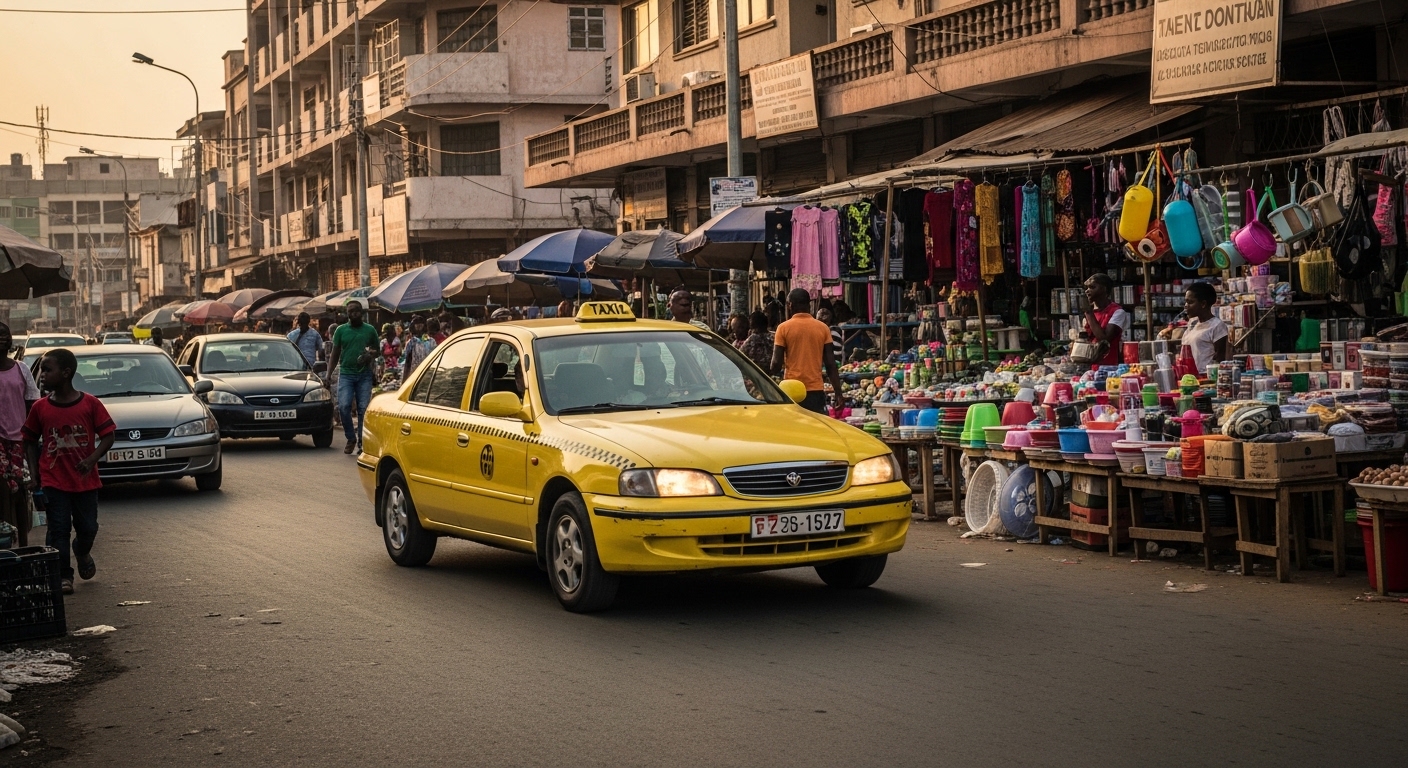
Roland experienced the same frustration in his personal life. When he's in Europe, he books a taxi and a specific category arrives — clean, on time, matching the description. When he's back in Cameroon and does the same thing, the experience is completely different. The car doesn't match. The condition doesn't match. The professionalism doesn't match.

It is the same human being making the booking. The difference is entirely in the system on the other end.

The gap Roland sees every day
🌍
In Europe Book a category. That category arrives. Clean vehicle. Professional driver. No negotiation, no surprise.
🚕
In Cameroon Book the same category. Different vehicle arrives. Different condition. Different professionalism.
🎪
In event production Agreed terms exist only in conversation. Substitutions happen. No-shows happen. No consequence follows.
Roland's diagnosis The gap is never talent. It is always the absence of a system that makes delivering on your word the rational choice.

It was never about people.

"Cameroonian professionals are not less capable, less skilled, or less honest. They are operating without the infrastructure that makes trust the rational default."

One founder reached this conclusion from the outside — observing a system that worked. The other reached it from the inside — watching a system that didn't. The diagnosis was identical. The solution would be the same.

Aime — The INSEAD observation, 2023
Roland — 20+ years in event production

Three structural gaps. One broken market.

Every service failure in Cameroon traces back to one of these — and Lianka is engineered to close all three.

01
No verifiable identity

When a professional has no traceable record, every client treats them as a stranger — regardless of actual skill or character. Anonymity makes trust structurally impossible, not just difficult.

02
No consequence for defection

When a bad job costs a professional nothing — no lost reputation, no financial penalty — there is no systemic incentive to deliver. Good behavior must carry economic weight to be reliable at scale.

03
No protected exchange

When payment and delivery happen simultaneously, the weaker party absorbs all risk. Escrow realigns incentives: both parties have a stake in a successful outcome before any money moves.

Designing the system from first principles.

Aime and Roland came back from their respective observations with the same mission: build the infrastructure that makes trust the rational default for every service transaction in Cameroon.

01

Verifiable identity, not reputation alone

Every professional on Lianka is verified in person — national ID, address, judicial record, professional guarantor. The record is permanent and cannot be gamed.

02

Escrow that aligns incentives

Payment is held by Lianka until the client confirms the job is done right. The professional cannot be stiffed. The client cannot lose money on a no-show. Both sides are protected.

03

Reputation with real stakes

Reviews only from verified, completed, paid jobs. A professional's Lianka record becomes their most valuable career asset — and it is impossible to fake.

04

Written scope before work begins

Every job starts with an agreed Statement of Work. No verbal understandings. No price surprises. Roland's event industry discipline, applied to home services.

How it came together
The Shenzhen moment — Winnie arranges for their luggage to travel separately across the city. It arrives at the hotel before they do. A system that worked without supervision.
2023 — The question forms
20 years of evidence — Roland's event production career: what accountability looks like when it's enforced, and what collapses when it isn't.
Ongoing — The problem validated from the inside
The research — Mianzi, Guanxi, Social Credit, platform escrow mechanics. Trust at scale is always the output of architecture, not character.
2024–2025 — The answer crystallized
Aime and Roland co-found Lianka. US incorporated. Field research in Douala. The trust layer for home services begins.
2026 — Building starts

The cost of a broken trust system is enormous.

This is not a lifestyle problem. It is an economic infrastructure problem — one that suppresses real activity at national scale.

Every year, billions of CFA in potential economic activity go unrealized in Cameroon — not because demand doesn't exist, but because the system makes executing on that demand irrational.

The diaspora — Cameroonians living in Europe, North America, and across Africa — are among the most financially capable customers for home services. They want to renovate family properties, hire staff, run errands, organize events. They do not. The reason is always the same: they cannot find someone they trust to execute without supervision.

Companies and institutions face the same wall. HR managers cannot hire contractors with confidence. Property managers cannot run maintenance programs reliably. Corporate facilities teams cannot maintain predictable service quality. The friction is not price — it is the absence of accountability infrastructure.

Home services is where we begin. But the problem is every category of service in Cameroon where a professional is hired to deliver against a commitment. Logistics. Event staffing. Construction. Facility management. The trust layer Lianka is building generalizes. The addressable market is far larger than any single vertical.
$500M+
Estimated annual value of suppressed home service activity in Cameroon due to trust deficit
4M+
Cameroonians in the diaspora who cannot confidently commission services back home
70%
Of Douala homeowners report abandoning a service project due to reliability concerns, per field research
$0
Cost of transaction insurance today for professionals or clients in Cameroon's informal service market
🏠

Home services — the entry point

Plumbing, electrical, cleaning, renovation. The most frequent, most personal, and most trust-sensitive category. Where Lianka starts.

🎪

Event staffing — Roland's domain

A multi-billion CFA industry where accountability failures are catastrophic. The infrastructure Lianka builds applies directly.

🏢

Corporate & facility services

Companies that cannot reliably hire contractors lose operational efficiency they can measure. The addressable spend is significant.

Liàn Incorruptible · Clean-handed · Honest under pressure

A name that carries a standard.

The name Lianka draws from 廉 (Liàn) — a Chinese virtue historically applied to those who hold power over others. It means incorruptible. Honest under pressure, when dishonesty would be easy, and when no one is watching.

It was not the virtue of someone who had never been tempted. It was the virtue of someone who had every opportunity to take a shortcut — and didn't. The standard applied to those entrusted with other people's property, time, and money.

Paired with a name that sounds rooted in Cameroon, 廉 becomes Lianka — carrying a single promise into every transaction: professionals you can trust, every time. Not because they have no other option, but because the system makes trust the better choice.

Etymology
廉 (Liàn) Chinese virtue — incorruptibility, the standard held by those entrusted with others' property and trust
-ka A suffix that sounds rooted in Cameroon — familiar, approachable, home
Lianka Professionals you can trust, every time

Built by people who lived the problem.

Not outsiders who discovered a market gap. Two people who grew up around this friction, built careers inside it, and decided it was time to fix it.

Aime Ngongang
MBA · INSEAD B.S. EECS · UC Berkeley Capital One · Goldman Sachs

Trained as an engineer at UC Berkeley and sharpened as a strategist at INSEAD, Aime has spent his career inside industries where trust is not optional — highly regulated, operationally heavy environments where a failed system costs real people real money and accountability is designed in, not assumed. That background gave him a specific lens: trust at scale is always an engineering problem, never a character problem.

The 2023 INSEAD trip gave him a question he couldn't put down: why does trust operate effortlessly in some systems, and collapse entirely in others? He spent months in the research — Chinese social credit mechanics, platform escrow design, the architecture behind accountability at scale — before returning to Cameroon to build the answer. Lianka is what happens when that discipline meets ground-level field research: 50+ homeowner interviews in Douala, 30+ professionals across 6 trade categories, and a model stress-tested from both sides of the market.

The problem is never the people. It is always the system they operate inside.
R
Roland Etundi

Roland has spent over 20 years producing events — concerts, corporate productions, and large-scale gatherings that require dozens of service providers to coordinate, commit, and deliver. In that time, he has seen the mechanics of service failure up close: the no-shows, the substitutions, the unresolvable disputes over verbal agreements.

He has also seen the gap from the client side. The taxi that doesn't match what was ordered. The service quality that is completely different depending on whether you're in Cameroon or Europe. The frustration is personal, not theoretical — and it has made Roland exacting about what accountability infrastructure actually has to do to work.

Talent is not the bottleneck. Accountability is. Fix that and everything else unlocks.

The trust layer for Cameroon
is being built now.

Launching in Douala and Yaoundé in 2026. Home services first — and that is just the beginning. Join the waitlist for early access, or reach out if you want to understand the full picture.